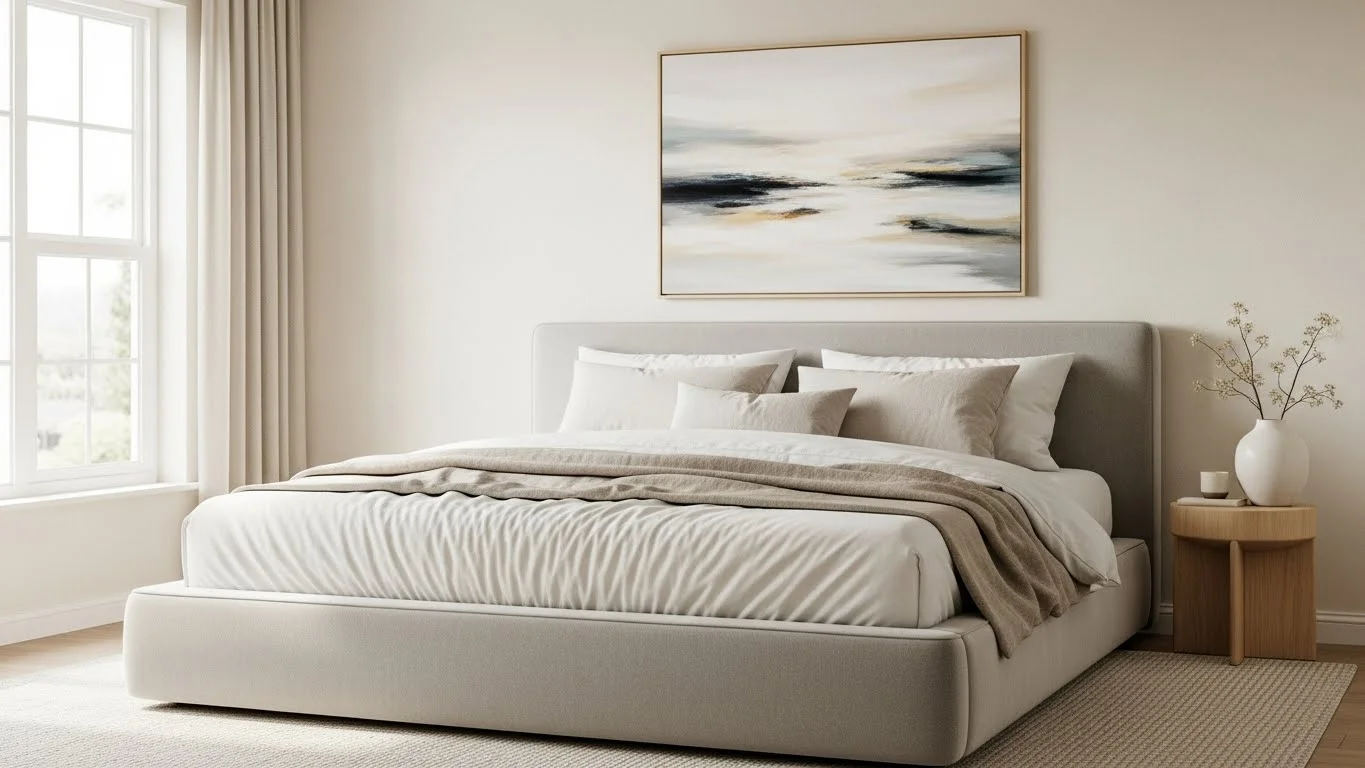
Your bedroom walls set the mood for the entire space. Too bare, and the room feels unfinished. Too busy, and it starts to feel chaotic instead of calming. The sweet spot is a look that feels intentional, breathable, and personal—without overwhelming the room.
The good news? You don’t need to fill every inch of wall space to make a big impact. With a few smart choices, you can decorate your bedroom walls in a way that feels styled, balanced, and easy to live with.
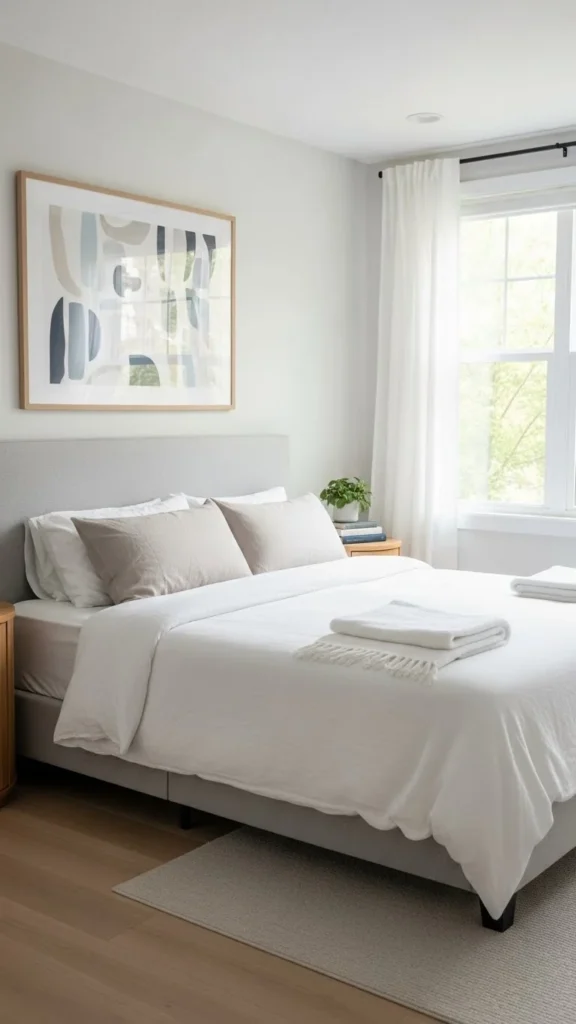
Below are practical, beginner-friendly tips to help you decorate your bedroom walls without overcrowding them.
Start With One Strong Focal Point
One of the biggest mistakes people make is trying to decorate every wall. Instead, choose one main focal wall and let it shine.
Great focal wall options include:
- The wall behind your bed
- The wall directly across from the bed
- A narrow accent wall beside a window
Pick one statement piece:
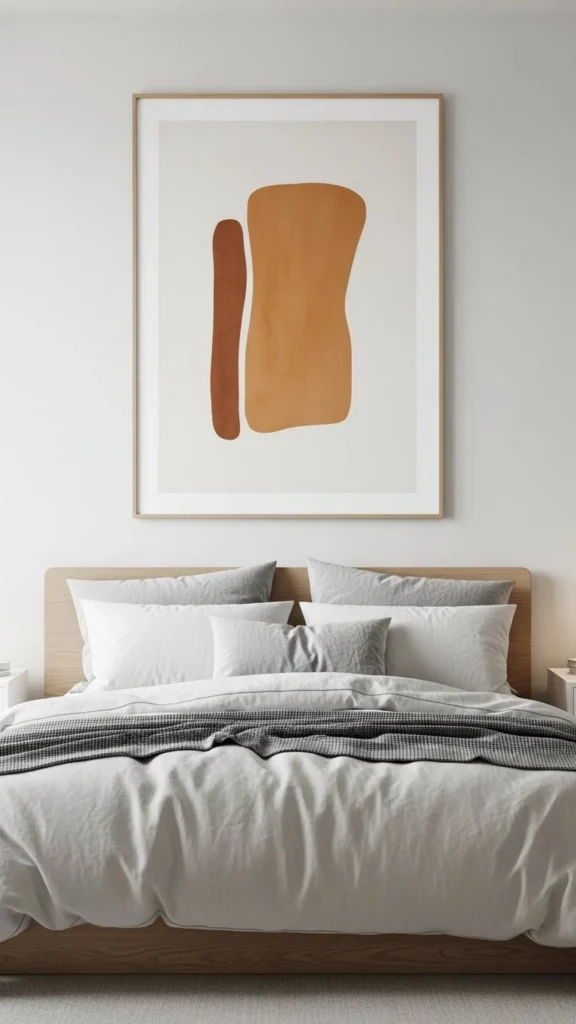
- A large framed artwork
- A fabric wall hanging
- A decorative mirror
When you commit to one standout piece, the rest of the walls can stay lighter and calmer. This instantly makes the room feel intentional instead of cluttered.
Tip: If the artwork is large, let it stand alone. Resist the urge to add more around it.
Use Fewer, Larger Pieces Instead of Many Small Ones
Multiple small items can quickly make a wall feel busy. A better approach is to use fewer pieces with more visual weight.
For example:
- One oversized frame instead of a collage of six
- Two medium prints spaced evenly instead of four cramped ones
- One wide shelf instead of several tiny ledges
This gives the eye space to rest and keeps the room feeling open.
If you love gallery walls, keep them simple:
- Stick to one color palette
- Use matching frames
- Leave equal spacing between each piece
Let Empty Space Work for You
Blank space is not wasted space. In fact, empty wall space is what makes decorated walls look good.
When walls are too full:
- The room feels smaller
- Decor loses impact
- The space feels visually noisy
Try this mindset shift:
- Decor is an accent, not the main attraction
- Empty space creates balance
- Less decor often feels more elevated
Stand back and look at your wall from the doorway. If your eyes don’t know where to rest, it’s a sign to remove something.
Add Texture Instead of More Decor
If your walls feel plain but you don’t want to add more items, texture is your secret weapon.
Texture adds depth without clutter. Consider:
- Fabric wall hangings
- Woven baskets
- Light wood panels
- Subtle wall molding
These options create interest while keeping a calm, minimal look.
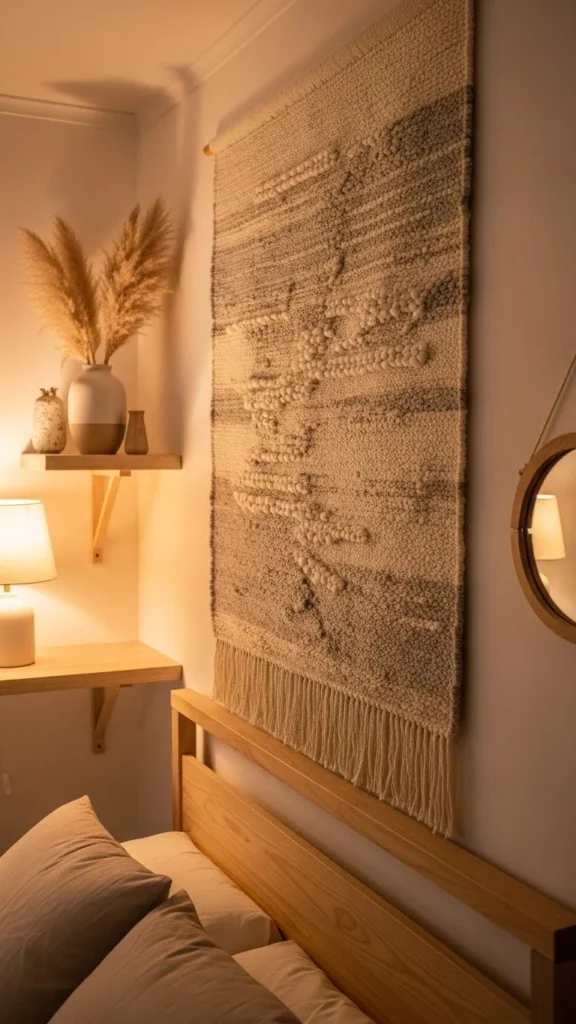
Texture works especially well in bedrooms because it feels soft, cozy, and restful.
Keep Wall Shelves Light and Intentional
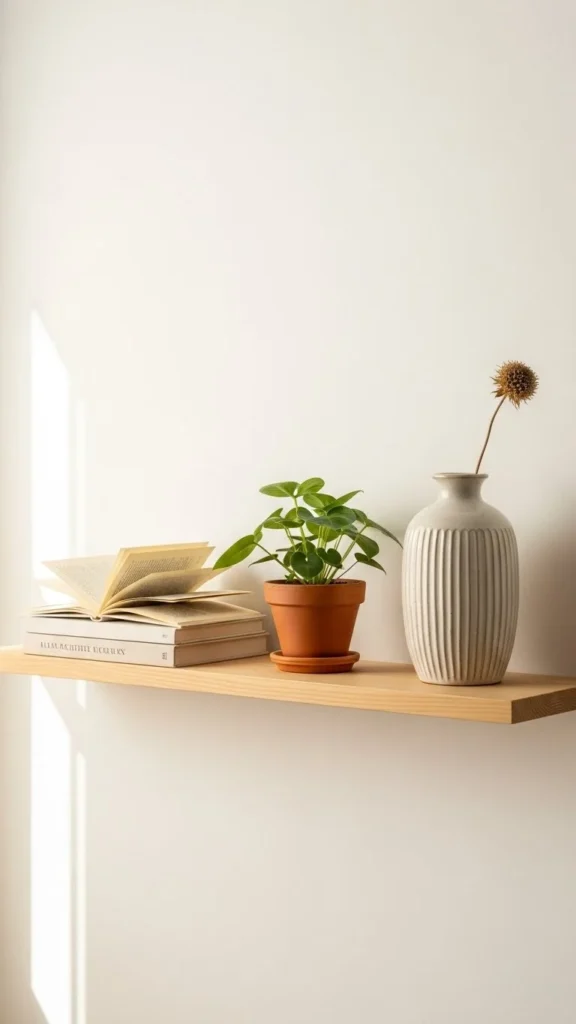
Wall shelves are helpful, but they can get overcrowded fast. The key is styling them with restraint.
Use this simple shelf formula:
- One vertical item (like a vase or plant)
- One horizontal item (like a book or tray)
- One open space
Avoid filling every inch. Leave breathing room between items.
Helpful tips:
- Limit shelves to one wall
- Keep colors neutral
- Avoid stacking too many small objects
If the shelf starts to feel messy, remove one item instead of rearranging everything.
Stick to a Calm Color Palette
Color plays a huge role in how crowded a wall feels. Too many bold colors can overwhelm a bedroom quickly.
For a peaceful look:
- Choose 2–3 main colors
- Repeat those colors across your decor
- Keep backgrounds light and soft
Neutral walls with slightly darker decor often feel more open than dark walls with mixed colors.
If you love color:
- Use it in artwork instead of paint
- Add color through textiles nearby
- Keep frames simple and consistent
Use Lighting to Highlight, Not Compete
Wall lighting can elevate your decor when used carefully.
Good options include:
- Simple wall sconces
- Soft picture lights
- Plug-in lights with clean lines
Lighting should highlight your wall decor—not compete with it.
Place lights:
- Above artwork
- On either side of the bed
- Near textured wall features
Avoid mixing too many styles of wall lighting in one room.
Step Back and Edit Regularly
Decorating is not a one-time task. As your taste changes, your walls should evolve too.
Every few months:
- Remove one item
- Swap pieces instead of adding more
- Reassess balance and spacing
If something no longer feels calming, it doesn’t belong in a bedroom.
Final Takeaway
Decorating bedroom walls without overcrowding comes down to intentional choices, space awareness, and editing. One strong focal point, a calm color palette, and plenty of breathing room can transform your bedroom into a peaceful retreat.
If you’re unsure, remember this rule: when in doubt, remove one thing.
Save this guide for later and revisit it the next time your bedroom walls start to feel a little too busy.