The fastest way to make a bedroom feel finished isn’t new furniture or expensive lighting—it’s wall art. Thoughtfully styled walls can instantly elevate a plain room into a space that feels intentional, cozy, and personal. The good news? You don’t need a designer budget or special training to pull it off. With a few smart principles, you can decorate your bedroom walls like a pro.
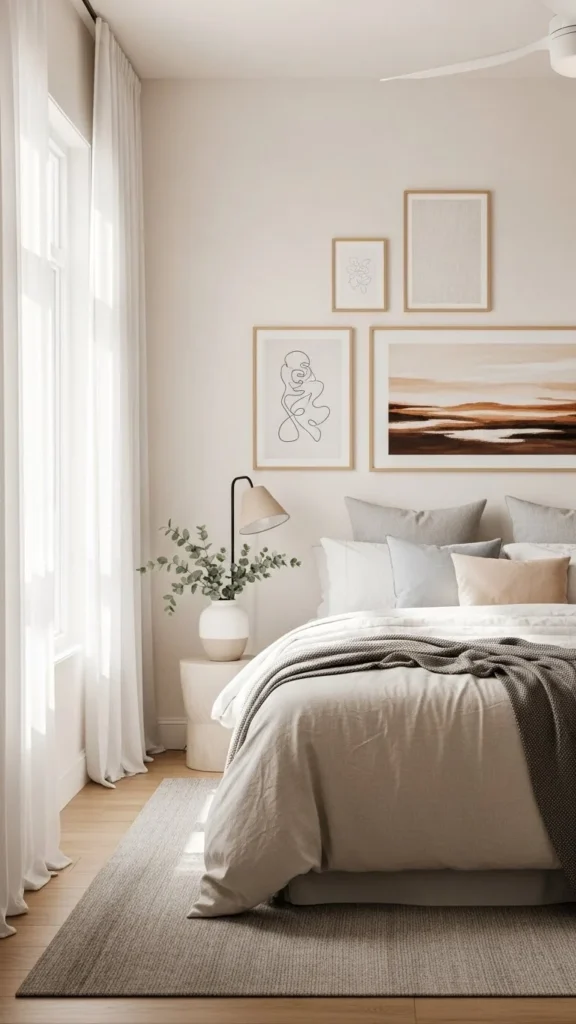
Below is a step-by-step guide to choosing, placing, and styling wall art so your bedroom looks polished and Pinterest-worthy.
Start with the Mood You Want to Create
Before shopping or hanging anything, pause and think about the feeling you want your bedroom to have. Designers always start with mood, not objects.
Ask yourself:
- Do I want calm and relaxing, or bold and expressive?
- Should the room feel cozy, airy, romantic, or modern?
- Am I drawn to soft neutrals or high-contrast statements?
Your answers will guide every decision that follows. For example:
- Calm vibes: abstract art, landscapes, soft color palettes
- Bold energy: graphic prints, strong lines, darker tones
- Cozy warmth: textured art, earthy colors, organic shapes
Keeping the mood clear prevents random choices that don’t work together.
Choose the Right Wall for Impact
Not every wall needs art. Designers focus on one or two key areas and let them shine.
The best spots for bedroom wall art:
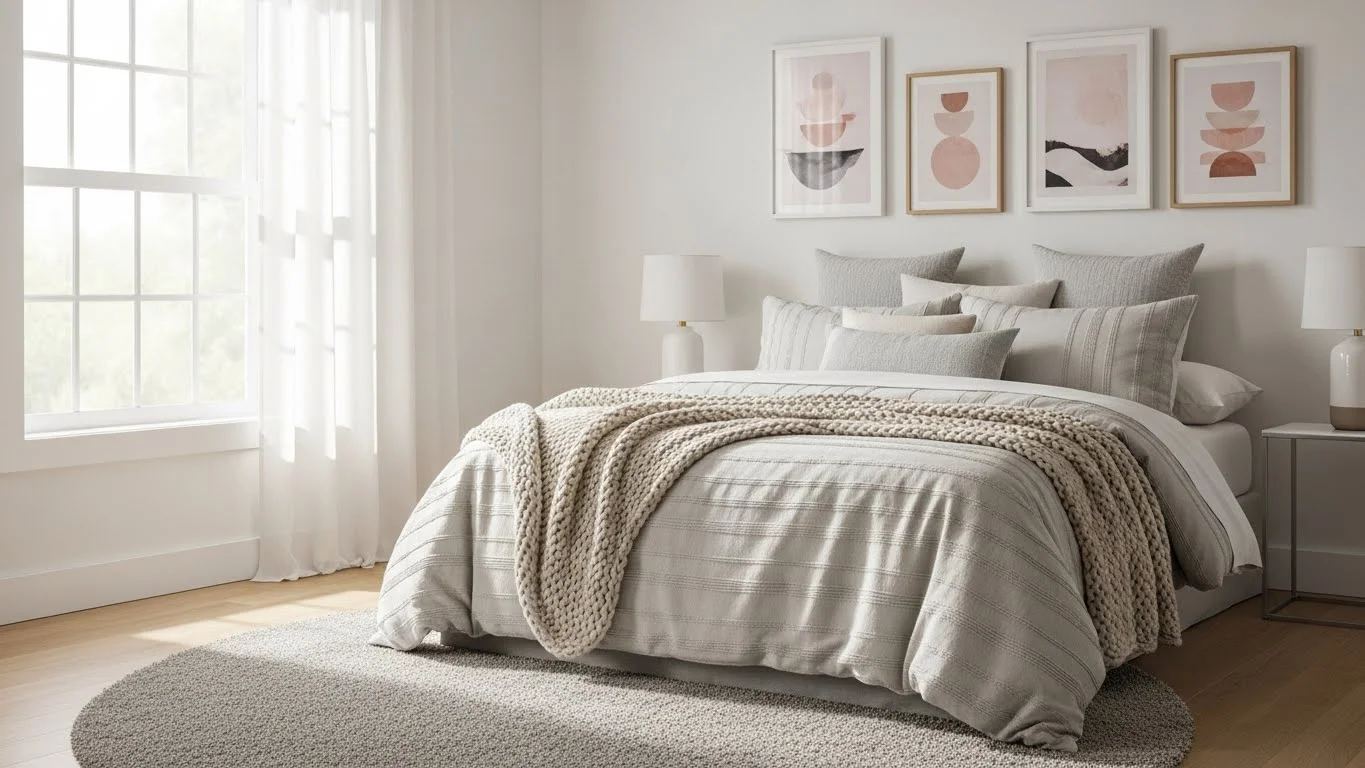
- Above the bed (the main focal point)
- Opposite the bed, especially if you see it when you wake up
- Above a dresser or bench
- Empty corners that feel unfinished
Avoid cluttering every wall. A few well-placed pieces feel more intentional than art everywhere.
Pick a Scale That Fits the Space
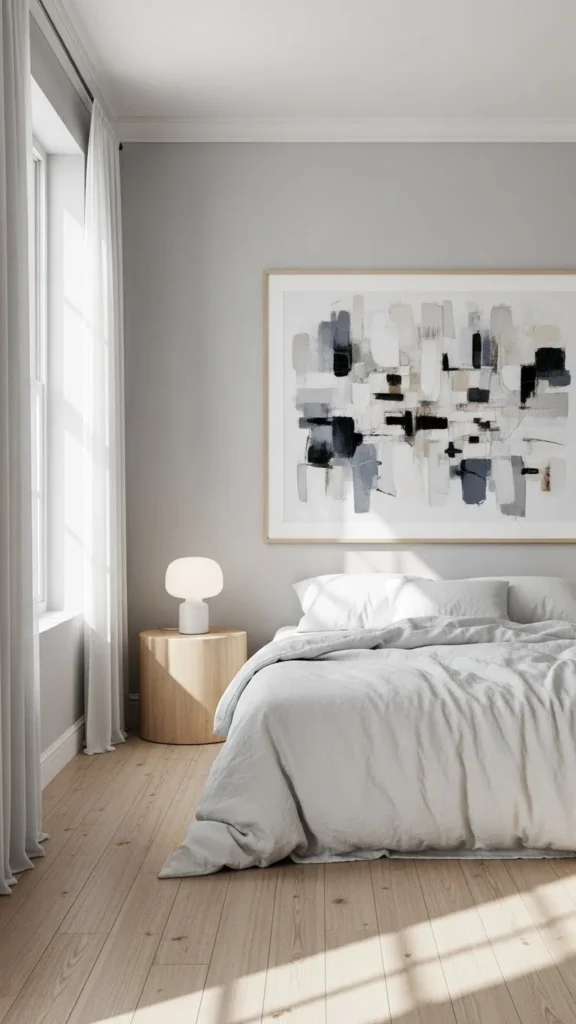
One of the biggest decorating mistakes is choosing art that’s too small. Designers almost always go bigger than expected.
General sizing tips:
- Art above the bed should be two-thirds the width of the bed
- A single large piece feels cleaner than many tiny frames
- For small bedrooms, fewer larger pieces prevent visual clutter
If you love smaller prints, group them into a gallery so they read as one visual unit rather than scattered pieces.
Master the Art of Gallery Walls
Gallery walls look effortless when done right—but they’re actually planned carefully.
Tips for a designer-style gallery wall:
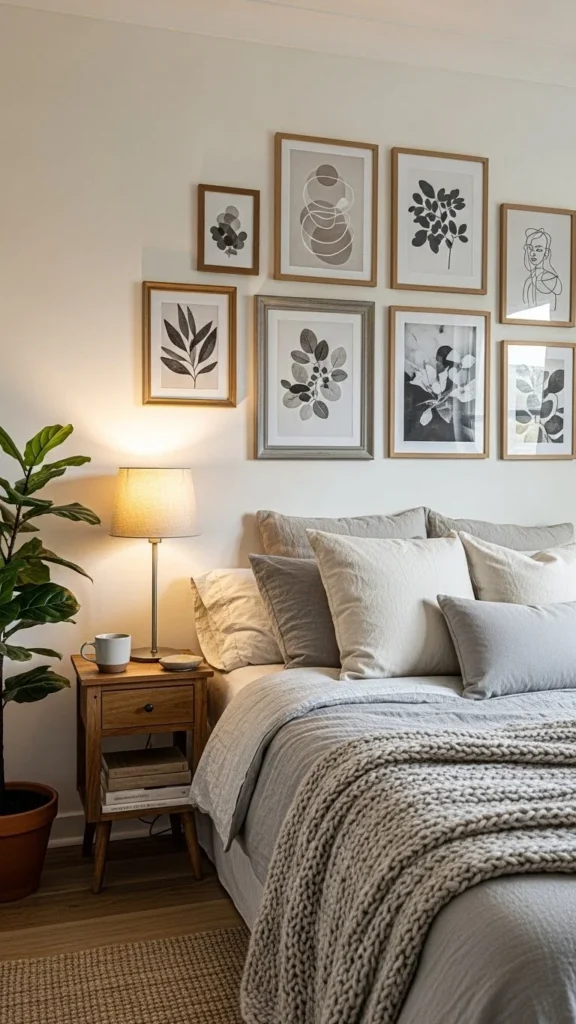
- Stick to a consistent color palette
- Mix frame styles, but keep one unifying element (color or finish)
- Lay everything out on the floor before hanging
- Keep spacing between frames even
Popular gallery wall styles include:
- Symmetrical grids for a clean, modern look
- Organic layouts for relaxed, creative bedrooms
Use Wall Art to Echo Your Bedroom Colors
Professional-looking rooms feel cohesive because colors repeat across the space.
Use wall art to:
- Pull accent colors from pillows or throws
- Balance darker furniture with lighter artwork
- Add contrast to neutral bedrooms
For example:
- Soft beige walls pair beautifully with black-and-white photography
- Warm wood furniture works well with earthy tones
- Neutral rooms come alive with subtle pops of muted color
Your art shouldn’t fight the room—it should connect everything together.
Layer Art for Depth and Texture
Designers don’t always hang everything. Layering art adds depth and a relaxed, lived-in feel.
Try these ideas:
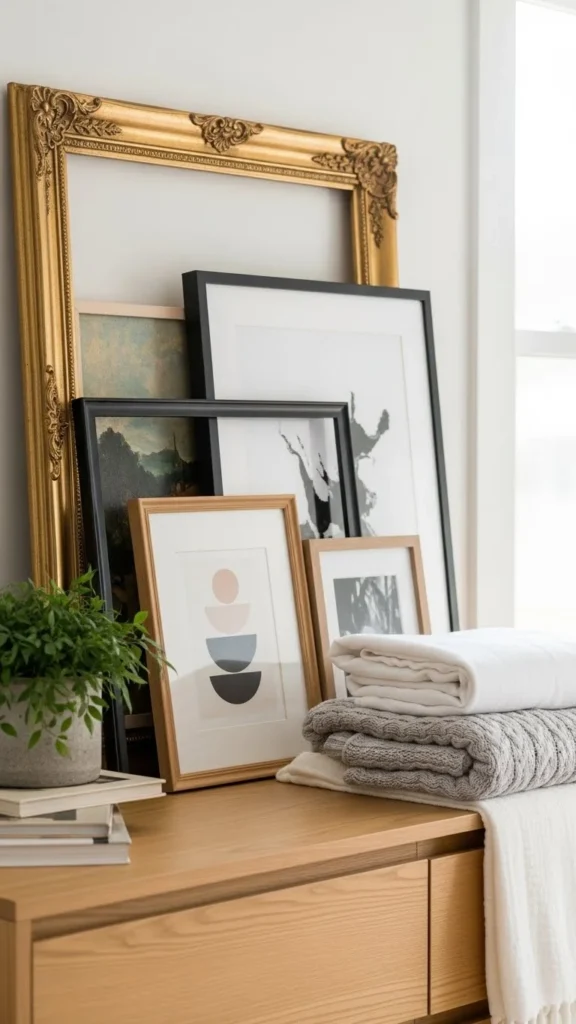
- Lean framed art on a shelf or dresser
- Layer smaller frames in front of larger ones
- Mix flat prints with textured pieces like woven or sculptural art
This approach works especially well in bedrooms because it feels less formal and more personal.
Don’t Forget Lighting Around Your Art
Lighting can completely change how wall art looks. Even the most beautiful piece can fall flat without proper light.
Simple ways to highlight art:
- Wall sconces above or beside frames
- Soft bedside lamps that cast upward light
- Natural light positioned to avoid harsh glare
Warm lighting tends to work best in bedrooms, keeping the space cozy and inviting.
Final Touches That Make It Feel Designer-Approved
Before calling it done, step back and check:
- Is the art centered and level?
- Does it relate to the bed or furniture below it?
- Does the room feel balanced, not crowded?
Sometimes removing one piece makes the entire wall look better. Designers edit constantly—less is often more.
The Takeaway
Decorating a bedroom with wall art like a designer is all about intention. Focus on mood, scale, placement, and cohesion rather than filling every empty space. When art feels connected to the room—and to you—the bedroom instantly feels elevated.
Save this guide for later and start styling your walls with confidence