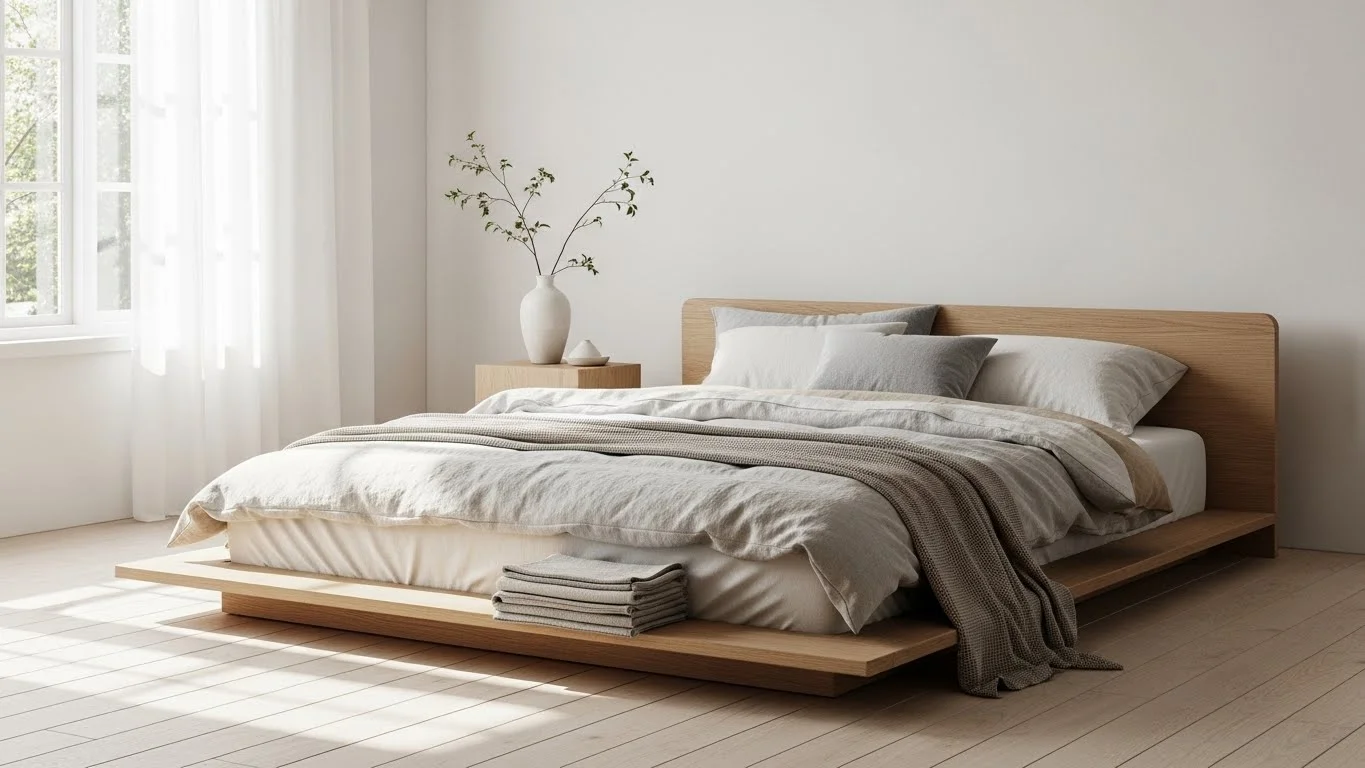
There’s something deeply calming about walking into a bedroom that instantly slows you down. Japandi design does exactly that by blending Japanese minimalism with Scandinavian warmth. The result is a bedroom that feels peaceful, grounded, and effortlessly beautiful—perfect for rest and reset.
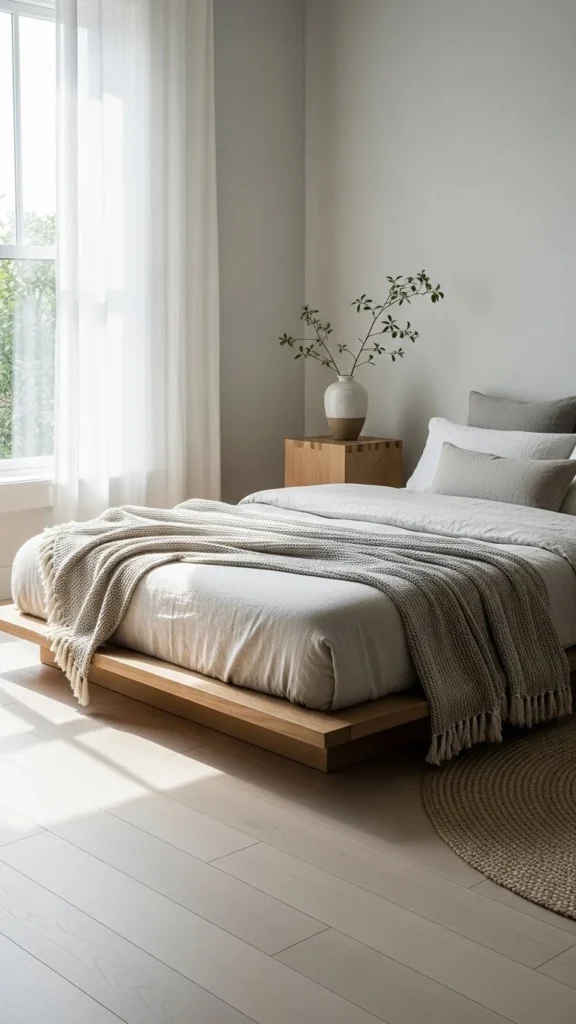
If your bedroom feels cluttered, busy, or just not relaxing enough, Japandi might be the reset you need. Here’s how to decorate a Japandi bedroom for true serenity, step by step.
Start With a Calm, Neutral Color Palette
Japandi bedrooms rely on soft, natural colors that soothe the senses. Think of shades inspired by nature rather than bold or high-contrast tones.
Stick to:
- Warm whites and creamy off-whites
- Soft beige, sand, or taupe
- Muted greys
- Earthy accents like clay, stone, or soft charcoal
Avoid sharp contrasts. Instead, layer similar tones to create depth without visual noise. Walls, bedding, and large furniture should stay within the same calm color family to keep the space cohesive.
A helpful rule: if a color feels loud or energizing, it probably doesn’t belong in a Japandi bedroom.
Choose Low, Simple Furniture With Purpose
Furniture in a Japandi bedroom should feel grounded and intentional. Less is more here.
Look for:
- Low-profile beds, preferably in light or mid-tone wood
- Clean-lined nightstands with no ornate details
- Simple benches or stools instead of bulky chairs
Every piece should serve a purpose. If it doesn’t add function or calm, consider leaving it out.
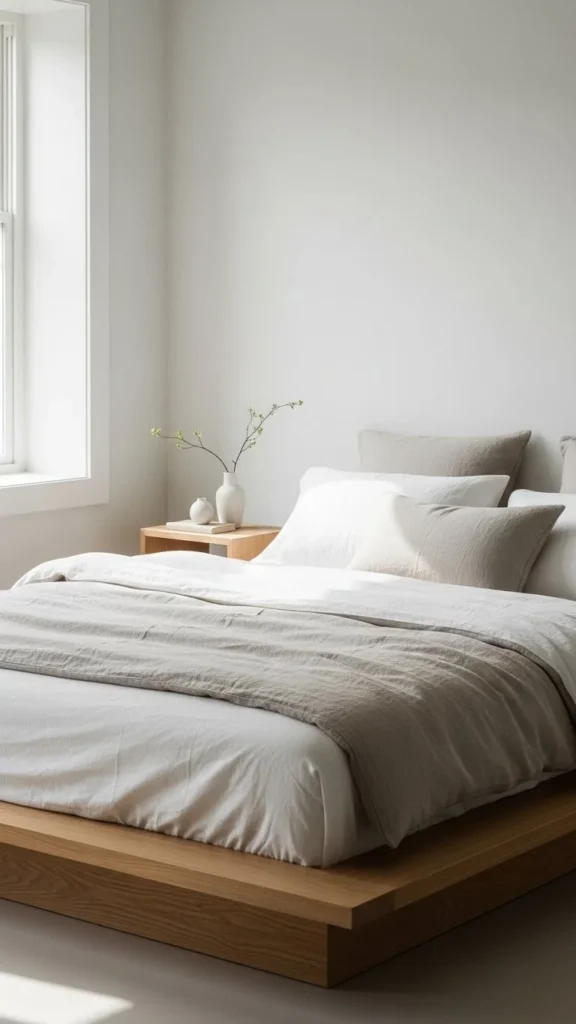
Keep spacing generous. Open floor space is part of the design—it allows the room to breathe and instantly feels more serene.
Layer Natural Textures for Warmth
Minimal doesn’t mean cold. Japandi design shines when you mix clean lines with cozy, tactile materials.
Add texture through:
- Linen or cotton bedding
- Wool or woven throws
- Jute, sisal, or flat-weave rugs
- Wooden accents with visible grain
Stick to natural materials whenever possible. They bring warmth and a lived-in feel without overwhelming the space.

Avoid shiny or synthetic finishes. Matte textures feel calmer and more organic, which supports the overall serene mood.
Keep Decor Minimal but Meaningful
Japandi bedrooms aren’t empty—they’re intentional. Decor should feel curated, not decorative for the sake of it.
Choose a few thoughtful pieces:
- One ceramic vase or handcrafted bowl
- A simple framed art print with neutral tones
- A sculptural lamp or pendant
Limit yourself to one or two decor items per surface. Nightstands, dressers, and shelves should never feel crowded.
This restraint helps your mind rest, too. Fewer visual distractions make it easier to relax at the end of the day.
Let Light Be Soft and Natural
Lighting plays a huge role in creating serenity. Harsh overhead lights can instantly break the calm.
Instead:
- Maximize natural daylight with sheer curtains
- Use warm-toned bulbs for evening lighting
- Add table lamps or wall sconces for soft glow
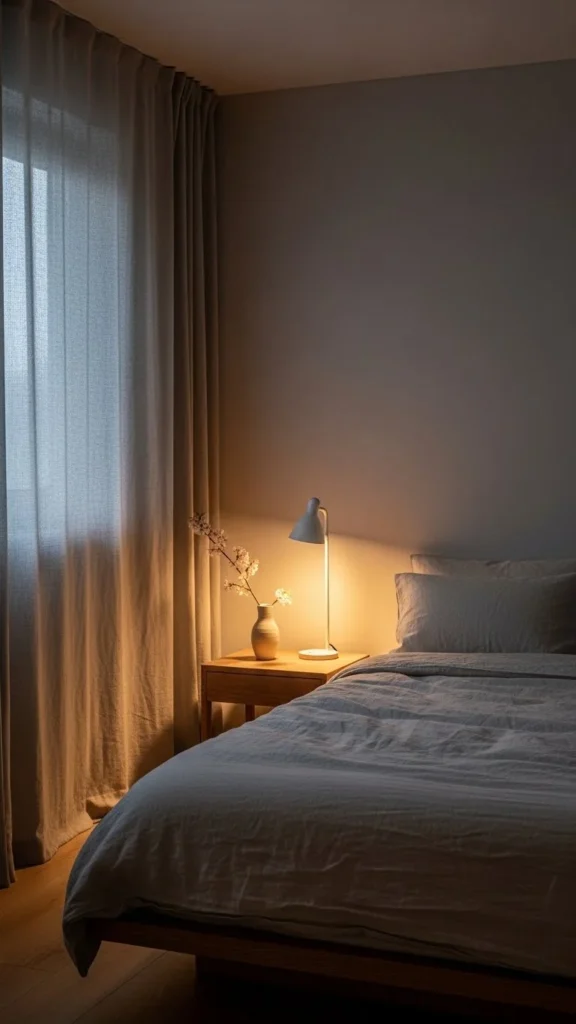
The goal is gentle, layered light that feels inviting rather than bright or clinical.
Add Greenery—But Keep It Subtle
Plants bring life into a Japandi bedroom, but they should feel calm, not jungle-like.
Good options include:
- A single potted plant in a clay or stone planter
- Dried branches in a simple vase
- Small bonsai-style greenery
One or two plants are enough. Keep them simple and sculptural so they enhance the space without stealing attention.
Embrace Empty Space as Part of the Design
One of the most important Japandi principles is learning to leave space empty. Empty areas aren’t wasted—they’re restful.
Avoid filling every corner. Let walls stay bare. Allow surfaces to remain clear. This visual pause is what gives Japandi bedrooms their peaceful energy.
If you’re unsure, remove one extra item and see how the room feels. Often, it instantly feels calmer.
Final Takeaway
A Japandi bedroom isn’t about following trends—it’s about creating a space that helps you unwind. By focusing on neutral colors, simple furniture, natural textures, and intentional decor, you can transform your bedroom into a true sanctuary.
Take it slow, edit as you go, and trust simplicity.
Save this guide for later and start creating a bedroom that feels like a deep breath at the end of every day.