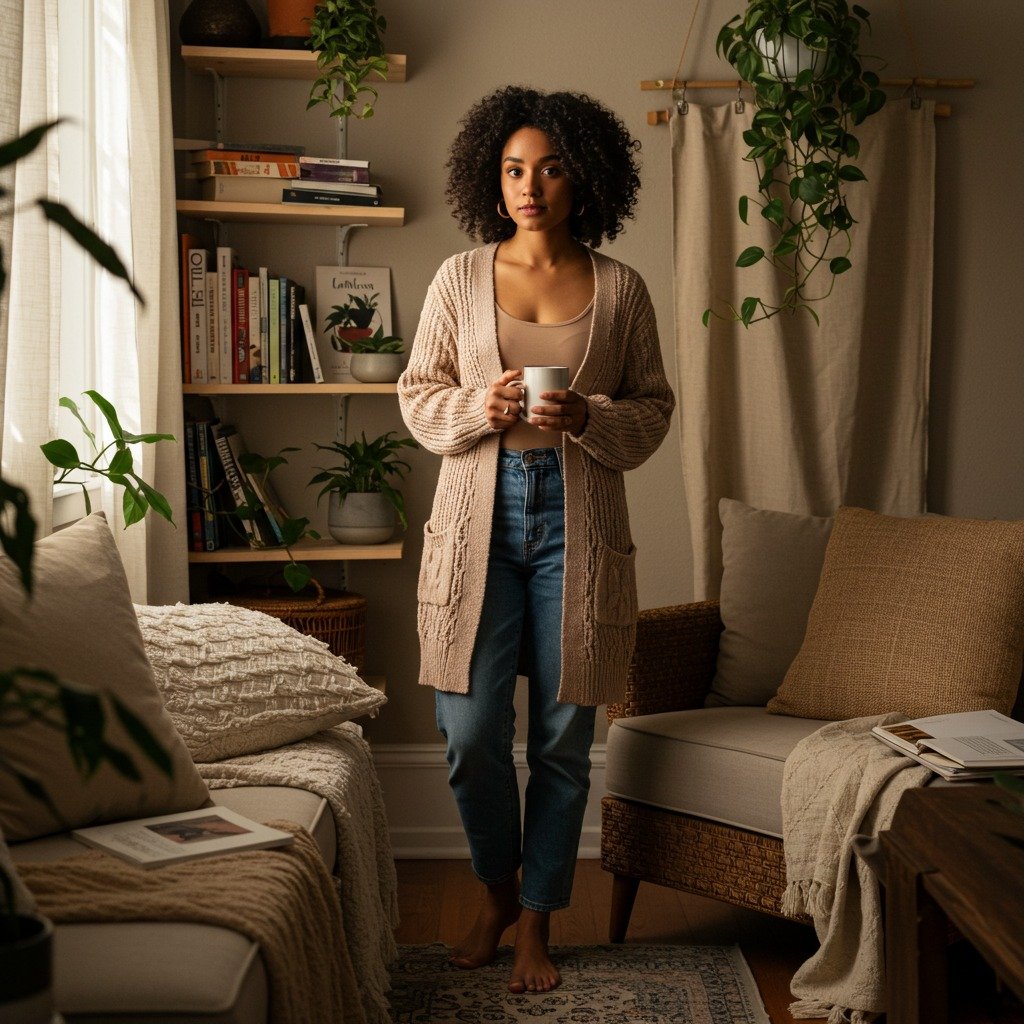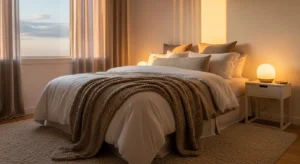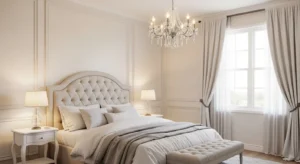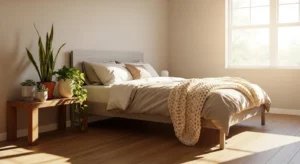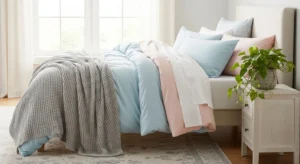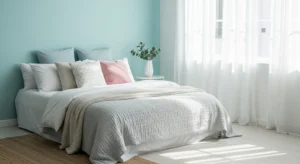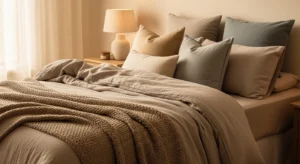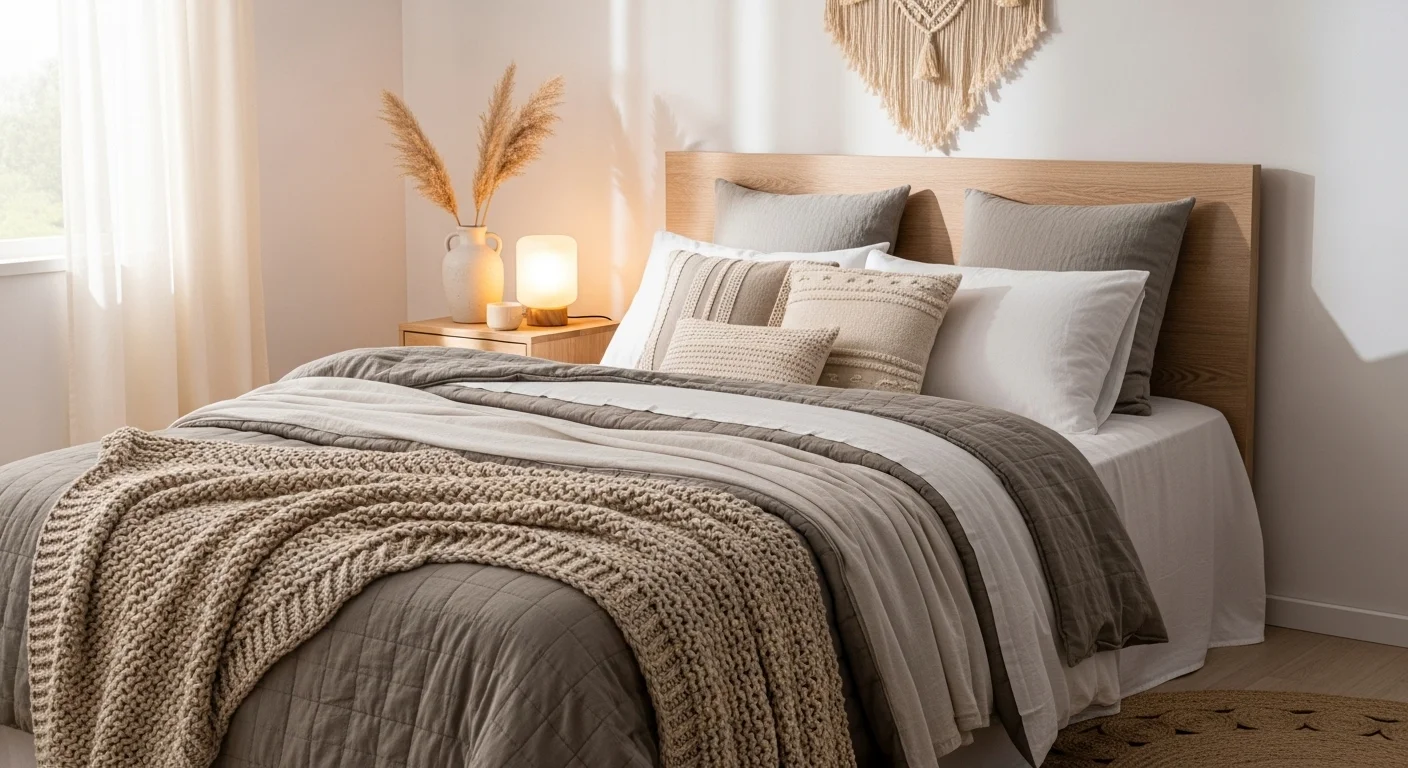
A bedroom can look beautiful and still feel flat. If your space feels a little one-note, texture might be what’s missing. Texture adds warmth, contrast, and personality—without needing bold colors or busy patterns. When layered thoughtfully, it creates depth that makes a bedroom feel inviting and styled, not staged.
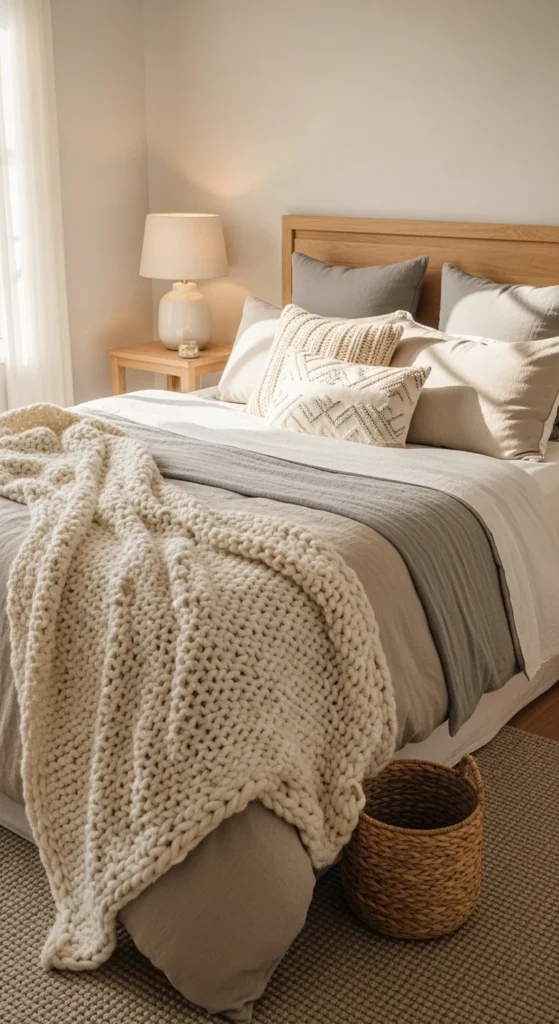
Below, you’ll learn how to decorate a bedroom with texture in simple, achievable steps that work for any style—from modern to cozy to minimal.
Start with Textured Bedding Layers
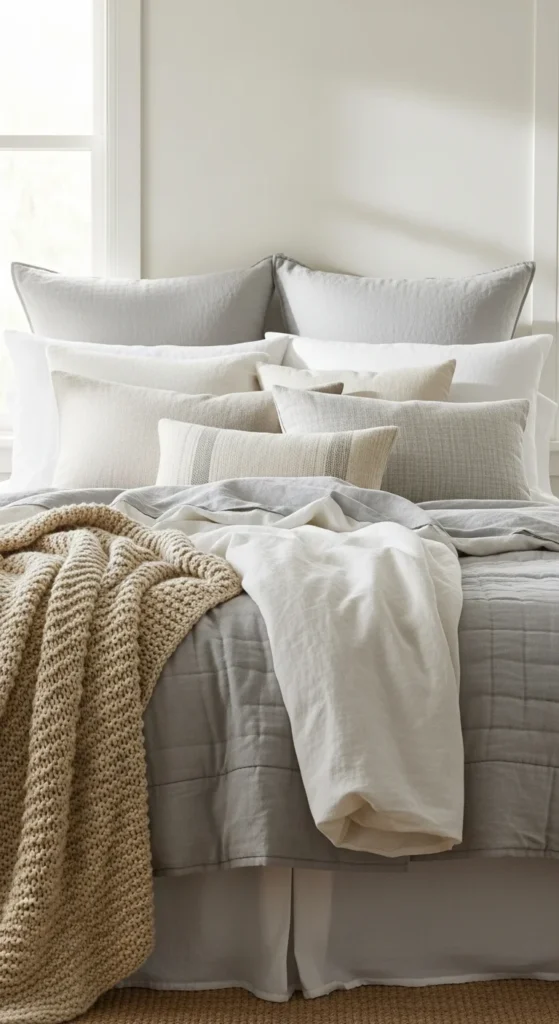
Your bed is the largest surface in the room, which makes it the perfect place to begin building texture. Flat bedding can make even a well-decorated bedroom feel unfinished.
Mix different fabrics instead of matching everything:
- Crisp cotton or linen sheets for a clean base
- A quilt or coverlet with visible stitching
- A chunky knit or softly woven throw draped at the foot
- Pillows in varied materials like linen, velvet, or boucle
The goal is contrast. Smooth sheets paired with something nubby or plush instantly add dimension without overwhelming the space.
Layer Soft Textures on the Floor
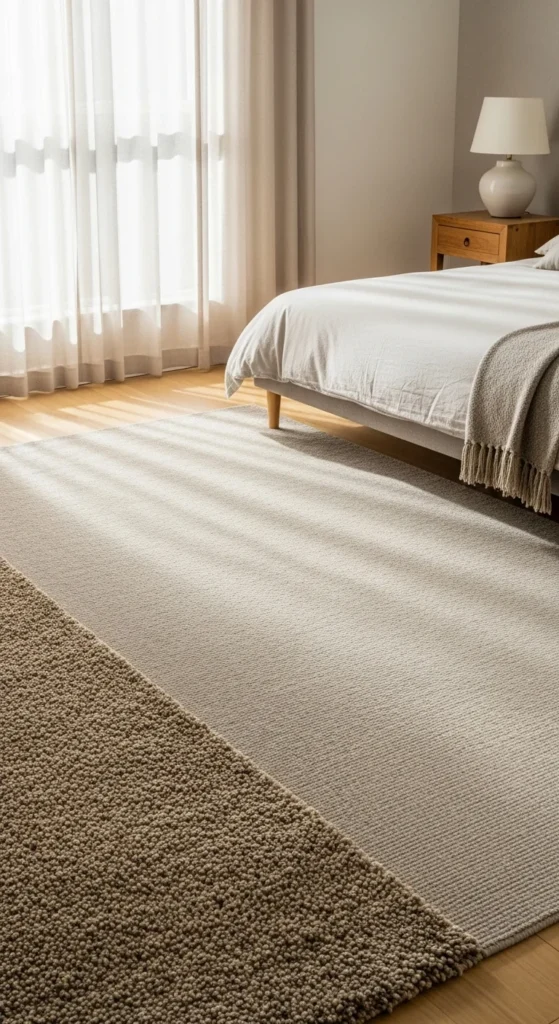
Floors are often overlooked, but they play a huge role in how a bedroom feels. Even if you have carpet, adding another layer can create visual interest and softness.
Consider:
- A flat-weave rug layered under the bed
- A small faux-fur or woven rug beside the bed
- Natural fiber rugs for subtle texture
Layering rugs works especially well in neutral bedrooms because the texture becomes the focal point instead of color. It also makes the room feel warmer and more intentional.
Mix Wall Textures Beyond Paint
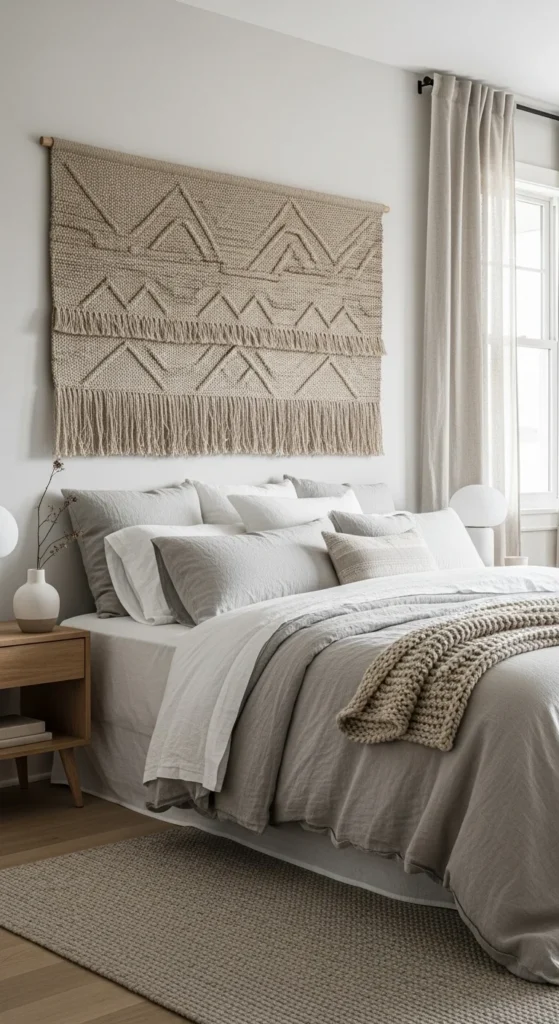
Walls don’t have to stay flat. Adding texture vertically draws the eye up and makes the room feel more layered and complete.
Simple ways to add wall texture:
- Fabric wall hangings or woven art
- Wood slat accents or subtle paneling
- Plaster-look finishes or textured wallpaper on one wall
- Framed textiles or fiber art
If you prefer a calm look, stick to one textured wall element and let it quietly stand out instead of competing with other decor.
Use Natural Materials for Subtle Depth
Natural materials add texture without feeling heavy or trendy. They also pair beautifully with almost any design style.
Try incorporating:
- Wood nightstands or bed frames
- Woven baskets for storage
- Ceramic or stone lamps
- Rattan or cane accents
These elements bring in visual variation while keeping the room grounded and balanced. Even small pieces can make a big difference when mixed with softer fabrics.
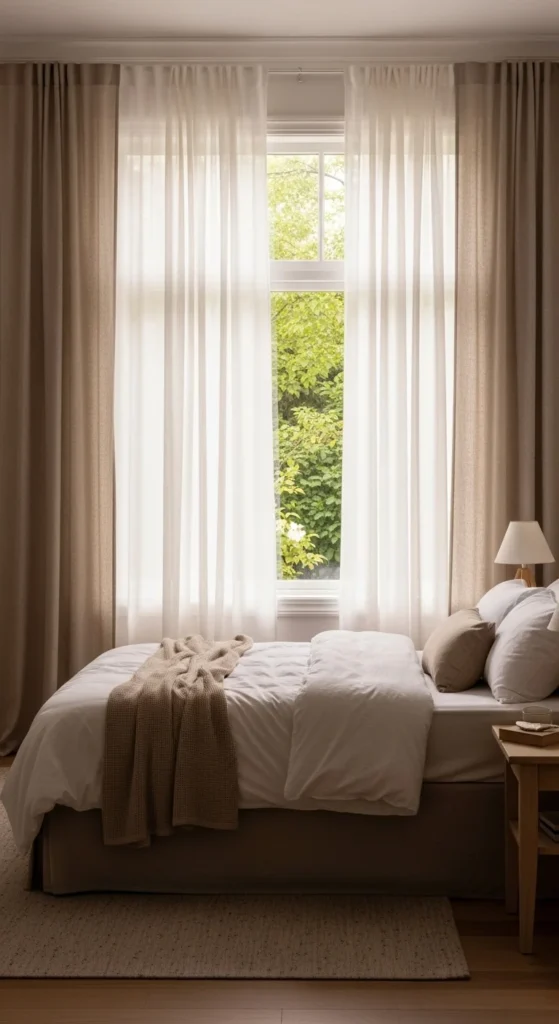
Add Texture Through Window Treatments
Windows are another opportunity to layer texture while keeping the bedroom comfortable and cozy.
Instead of plain blinds alone, consider:
- Sheer curtains layered with heavier drapes
- Linen or cotton panels with visible weave
- Soft roman shades paired with fabric curtains
Textured window treatments help filter light beautifully and soften hard lines in the room, especially in bedrooms with lots of straight edges.
Balance Smooth and Rough Surfaces
The key to decorating with texture is balance. Too much rough texture can feel heavy, while too many smooth surfaces feel flat.
Aim for a mix:
- Smooth: mirrors, glass, polished wood
- Soft: bedding, rugs, curtains
- Rough or tactile: baskets, knits, ceramics
When these elements work together, the room feels layered without looking cluttered. Step back and notice where everything feels too similar—then swap in a contrasting texture.
Keep the Color Palette Calm
Texture stands out best when the color palette stays simple. Neutrals like beige, cream, gray, and soft earth tones allow different materials to shine.
If you love color, keep it limited:
- Use one or two main shades
- Let texture do the visual work
- Repeat materials to create harmony
This approach keeps the bedroom restful while still feeling rich and designed.
Final Thoughts: Let Texture Do the Heavy Lifting
Decorating a bedroom with texture is about layering, not filling. You don’t need more stuff—you need better contrast. By mixing fabrics, natural materials, and soft finishes, you create depth that feels cozy, stylish, and personal.
Take it one layer at a time, and trust your eye. When the room feels warm and inviting, you’ll know the texture is working.
Save this guide for later and start layering your bedroom with confidence!