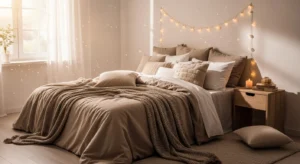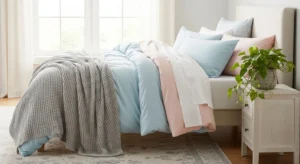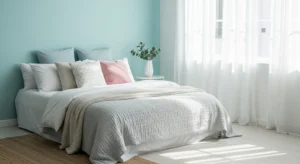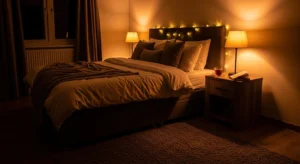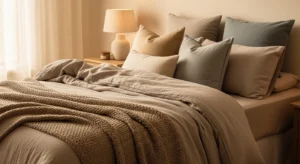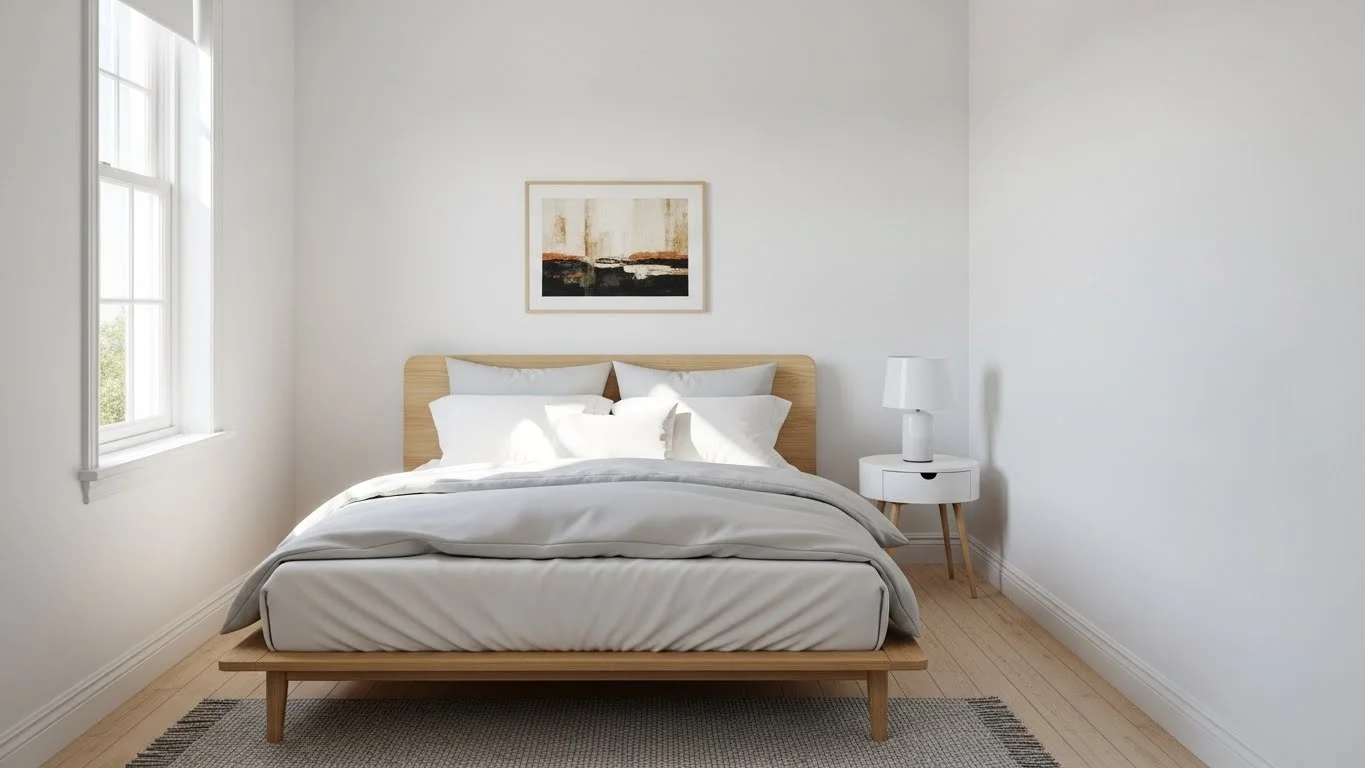
A small bedroom doesn’t have to feel cramped or cluttered. With the right design tricks, even the tiniest space can feel open, calm, and surprisingly spacious. The secret isn’t knocking down walls—it’s knowing how to use color, light, furniture, and layout in smart ways that visually expand the room.
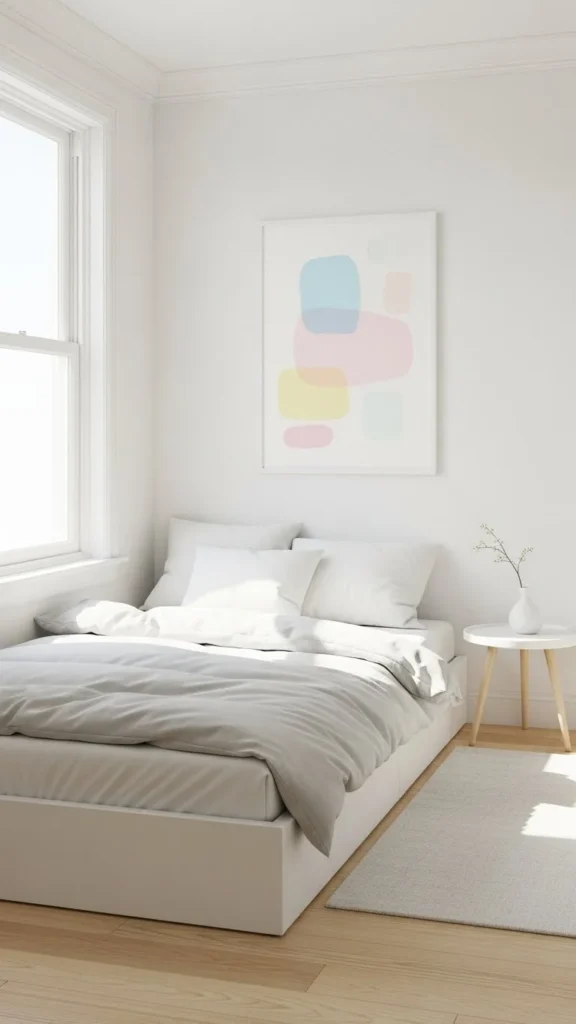
If your bedroom feels tight or crowded, don’t worry. These practical, Pinterest-friendly tips will help you decorate a small bedroom so it looks bigger, brighter, and more inviting—without a full renovation.
Choose Light Colors to Open Up the Space
Color plays a huge role in how large a room feels. Lighter shades reflect light, which makes walls appear farther apart.
Go for:
- Soft whites
- Warm creams
- Pale gray
- Light beige
- Muted pastels like blush or sage
You don’t have to stick to pure white. The goal is to keep walls, ceilings, and large furniture pieces in the same light color family to avoid visual breaks.
Pro tip: Paint the ceiling the same color as the walls or just one shade lighter. This blurs the edges and makes the room feel taller.
Avoid heavy contrast on walls. Dark accent walls can look stylish, but in a small bedroom, they often shrink the space visually.
Use Smart Furniture That Fits the Scale
Oversized furniture is one of the fastest ways to make a small bedroom feel smaller. Instead, choose pieces that match the scale of the room.
Look for:
- Low-profile beds
- Slim nightstands
- Beds with legs instead of bulky bases
- Wall-mounted shelves instead of large dressers
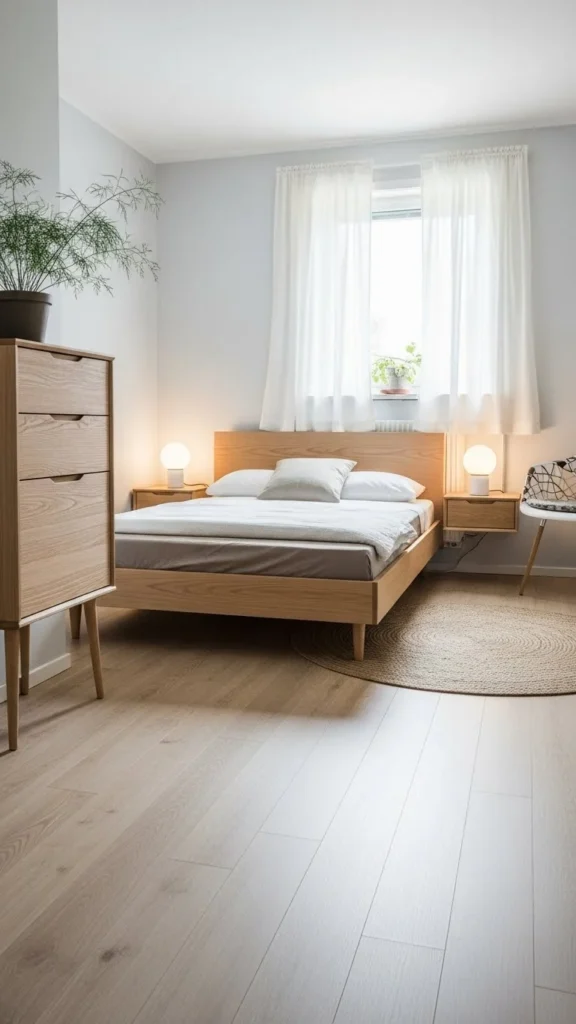
Furniture with visible legs allows light and air to flow underneath, making the room feel more open. If storage is a concern, choose a bed with built-in drawers rather than adding extra furniture.
Try to keep the number of pieces minimal. Fewer items create less visual clutter, which instantly makes a room feel larger.
Let in as Much Light as Possible
Light—both natural and artificial—can dramatically change how big a bedroom feels.
Maximize natural light by:
- Using sheer or light-filtering curtains
- Hanging curtains close to the ceiling to draw the eye upward
- Keeping windows uncluttered
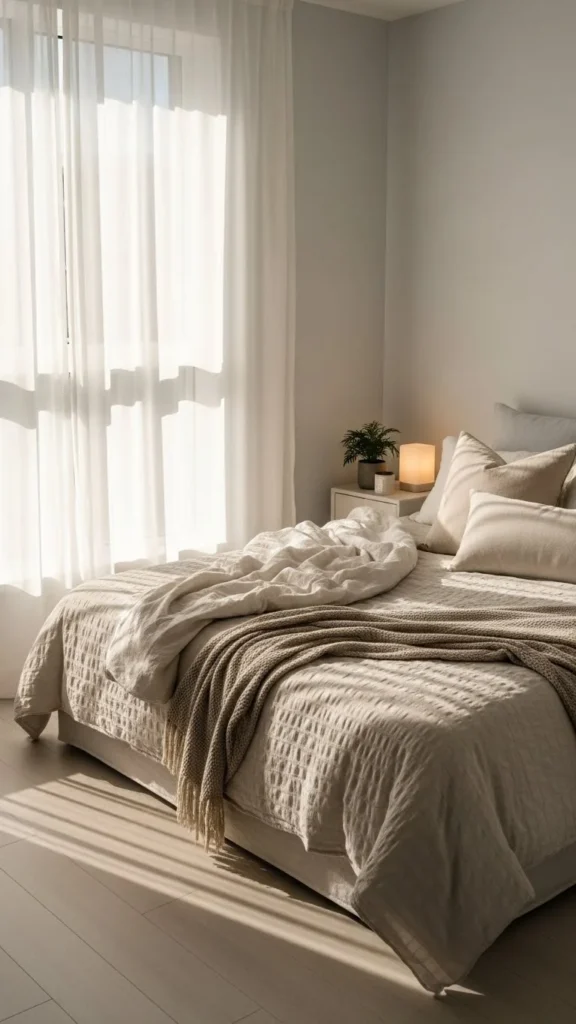
For artificial lighting, skip a single overhead light. Instead, layer your lighting:
- Table lamps
- Wall sconces
- Soft bedside lighting
This spreads light evenly and prevents dark corners, which can make a room feel boxed in.
Use Mirrors to Create Visual Depth
Mirrors are one of the most effective tools for making a small bedroom look bigger. They reflect light and create the illusion of depth.
Best mirror ideas:
- A large mirror leaning against a wall
- Mirrored closet doors
- A mirror placed opposite a window
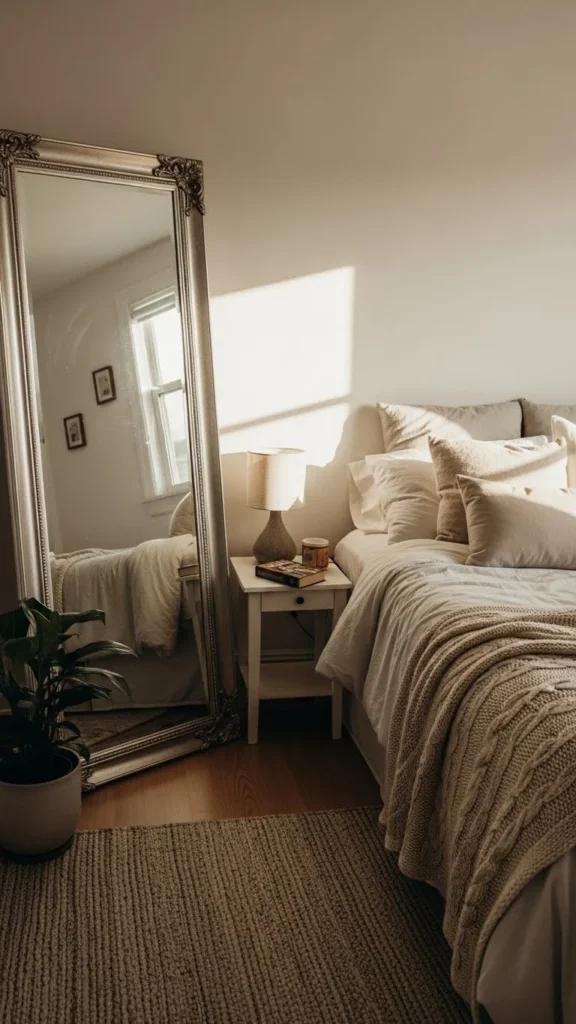
Avoid using several small mirrors scattered around the room. One or two well-placed mirrors work better and keep the space feeling calm instead of busy.
Keep the Floor Visible and Uncluttered
The more floor you can see, the bigger your bedroom will feel. This doesn’t mean you have to remove everything—it just means being intentional.
Simple tricks:
- Choose a bed with legs
- Use floating shelves instead of floor units
- Keep decor off the floor when possible
If you use a rug, make sure it’s large enough to extend under the bed. A rug that’s too small can actually make the room look tighter.
Stick to one main rug rather than layering several small ones, which can break up the space visually.
Stick to a Simple, Cohesive Style
Too many patterns, colors, or textures can overwhelm a small bedroom. A cohesive style helps the room feel larger and more relaxing.
Try this approach:
- Limit your color palette to 2–3 tones
- Repeat similar materials (wood, fabric, metal)
- Choose simple patterns over bold prints
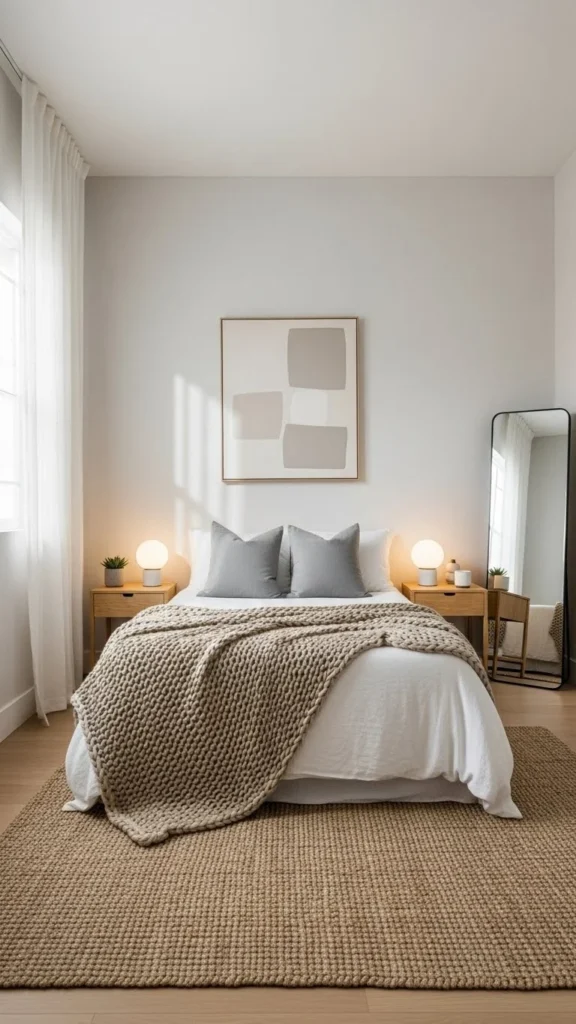
Decorate with intention. A few meaningful pieces—like artwork, pillows, or plants—will look better than filling every surface.
Final Takeaway
Decorating a small bedroom to look bigger is all about visual tricks that create openness and balance. Light colors, smart furniture choices, mirrors, and clutter-free layouts can completely change how your space feels.
You don’t need more square footage—you just need the right strategy.
Save this guide for later and try one tip at a time. Small changes can make a big difference.